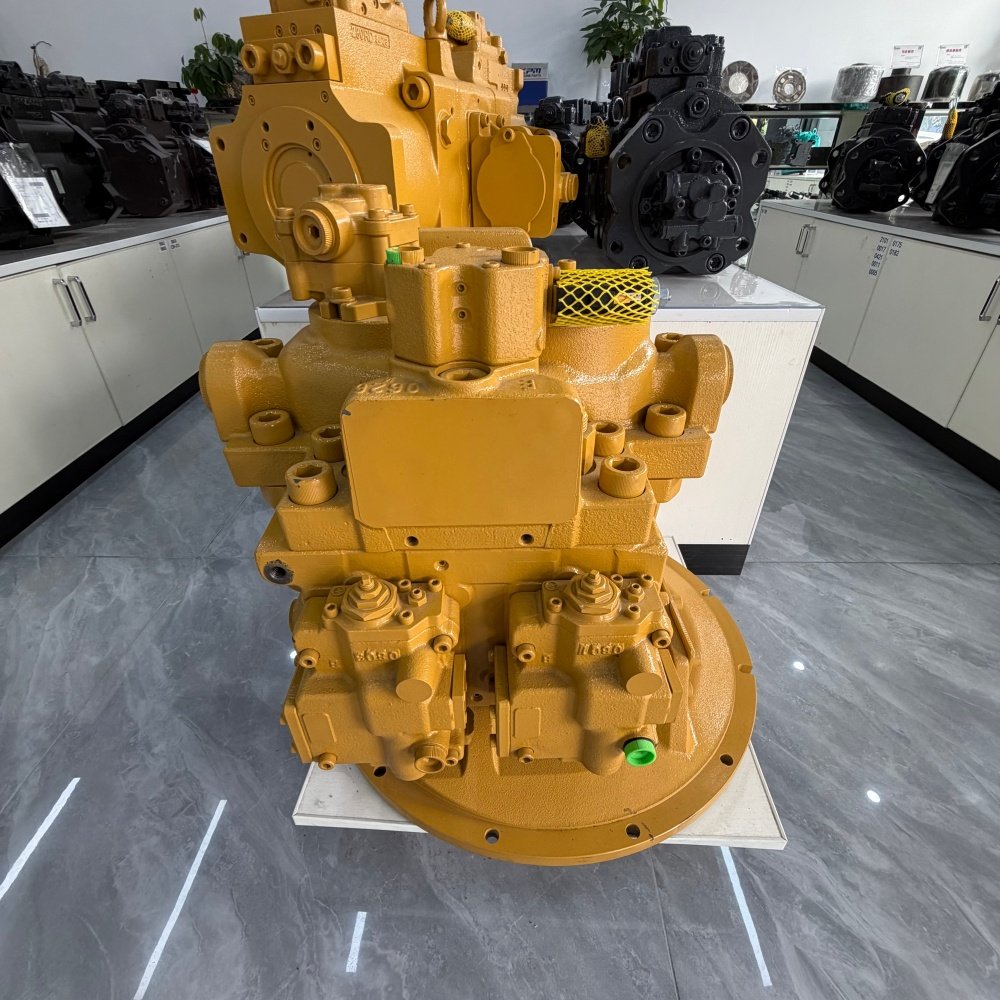
The hydraulic main pump represents the mechanical heart of any heavy earthmoving machine. Converting engine torque into high-pressure fluid flow, the excavator hydraulic pump drives every critical function on the job site—from boom lifting and arm crowding to upper-structure swing and track travel. When a main pump suffers internal wear, pressure loss, or catastrophic mechanical breakdown, the entire excavator grinds to a halt, incurring costly machine downtime and lost operational revenue.
For construction machinery parts wholesalers, fleet procurement managers, and independent repair shop operations, sourcing replacement hydraulic pumps requires balancing technical precision with financial pragmatism. A mismatched pump, sub-par casting material, or improper control setting can result in rapid seal destruction, system overheating, or early pump seizure.
This guide delivers an authoritative technical breakdown of excavator hydraulic pumps, detailing key engineering specifications, failure diagnostic indicators, commissioning standards, and a B2B procurement comparison framework.
Core Technical Specifications: What Wholesale Procurement Managers Must Evaluate
Selecting an excavator hydraulic pump extends far beyond matching the external mounting bolt pattern. Procurement managers and technical sales specialists must verify four primary mechanical and hydraulic parameters against the machine manufacturer’s original service manual.
1. Displacement (cm³/rev) and Flow Rate (L/min)
Pump displacement defines the volume of hydraulic oil pushed through the pump outlet during one full shaft revolution, measured in cubic centimeters per revolution (cm³/rev). Combined with engine drive speed (RPM), displacement determines total pump flow capacity in liters per minute (L/min):
Flow Rate (L/min) = Displacement (cm³/rev) × Engine Speed (RPM)/1000 × Volumetric Efficiency
- Compact Excavators (1 to 6 tons): Typically utilize displacement ratings between 15 and 45 cm³/rev, delivering total flow rates from 30 to 90 L/min.
- Medium Excavators (13 to 25 tons): Commonly feature twin-pump configurations with displacements from 110 to 160 cm³/rev per section, delivering combined flow rates between 2 × 200 L/min and 2 × 240 L/min.
- Heavy Mining Excavators (30 to 90+ tons): Demand massive displacement units from 180 up to 280+ cm³/rev per pump section, generating combined system flow exceeding 2 × 400 L/min to 2 × 500 L/min.
2. Operating and Peak Pressure Ratings (Bar / MPa)
Hydraulic pumps operate under continuous working pressure and intermittent peak shock loads. The replacement unit must meet or exceed the relief valve settings of the excavator’s main control valve:
- Nominal/Rated Pressure: The maximum continuous working pressure at which the pump delivers its rated service life. Standard modern excavators run nominal operating pressures between 300 bar and 350 bar (30 to 35 MPa / 4,350 to 5,076 PSI).
- Peak Pressure: The short-term pressure spike tolerated during heavy digging breakouts or sudden load stalls, often rated up to 373 bar (37.3 MPa).
Key Takeaway: Installing a hydraulic pump with a rated operating pressure below the excavator’s main relief setting will lead to accelerated swashplate fatigue, barrel lifting, and premature fluid bypass.
3. Pump Configuration and Control Types
Modern hydraulic excavators predominantly utilize variable-displacement axial piston pumps, frequently built in tandem or twin-assembly layouts driven by a single engine input shaft. These pumps adjust oil delivery dynamically based on operator joystick input and load resistance:
- Open-Center Systems: Utilize fixed or simple negative-flow control where oil returns directly to the reservoir when joysticks sit in neutral.
- Load-Sensing (Closed-Center) Systems: Feature complex proportional control valves that adjust pump swashplate angle to deliver only the exact pressure and flow required by active actuators, maximizing engine fuel efficiency.Excavator Weight ClassTypical Pump ConfigurationDisplacement Range (per section)Operating Pressure StandardMini (1–5 Tons)Single or Triple Gear / Variable Piston15–45 cm³/rev200–250 bar (20–25 MPa)Medium (12–22 Tons)Twin Variable Axial Piston (e.g., K3V63 / K3V112)63–112 cm³/rev320–350 bar (32–35 MPa)Heavy (30–50 Tons)Twin Variable Axial Piston (e.g., K5V160 / K5V200)140–212 cm³/rev343–370 bar (34.3–37 MPa)
Anatomy & Engineering Mechanics of Main Hydraulic Pumps
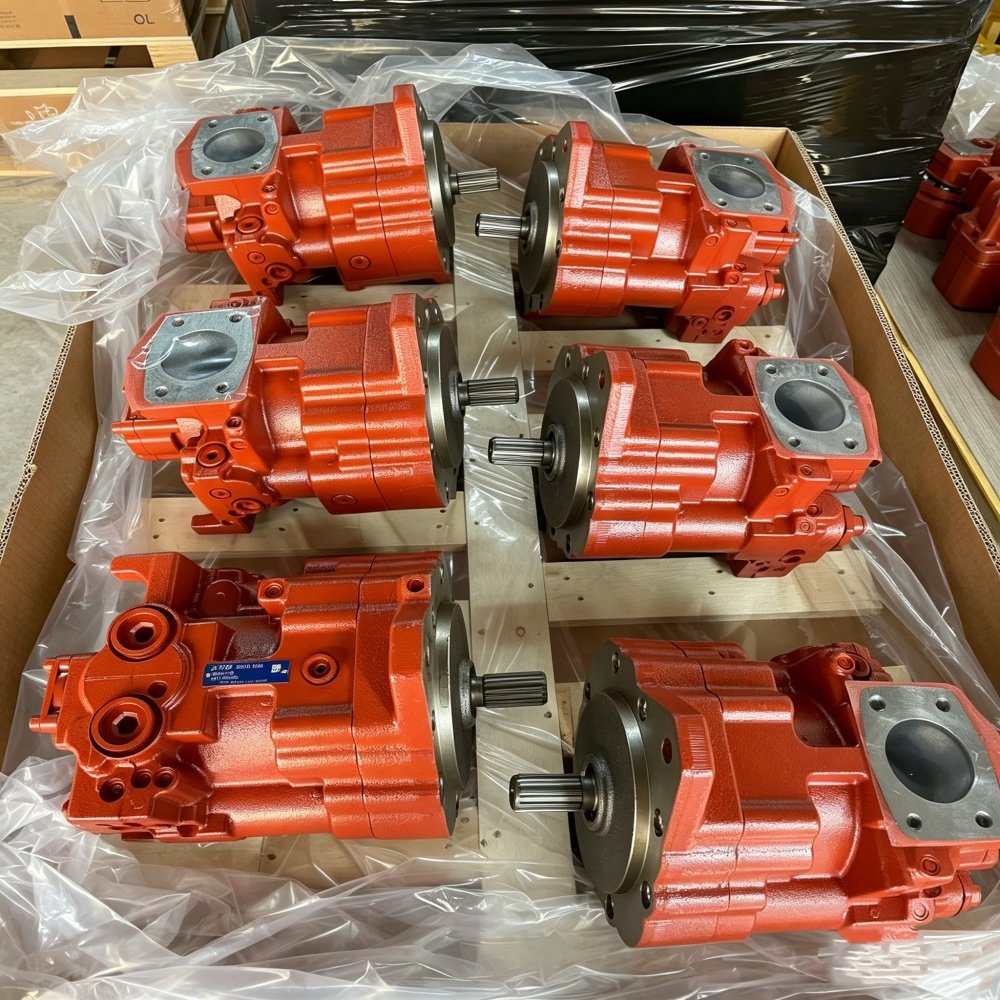
To evaluate aftermarket pump quality, purchasing decision-makers must understand the internal wearing components subject to high-friction contact and extreme fluid velocity.
Engine Drive Shaft → Splined Rotor Hub → Cylinder Block (Barrel)
Piston Shoes Slide Along Inclined Swashplate (Swivel Angle Controls Stroke) Pressurized Oil Passes Through Valve Plate (Port Plate) to Outlet Ports
- Cylinder Block (Barrel) & Pistons: The cylinder block rotates in unison with the main drive shaft. Multiple precision-machined pistons (typically 7 or 9 per pump barrel) reciprocating inside the cylinder bores suction and compress oil. Premium pumps utilize forged alloy steel pistons with surface nitriding or carburizing to achieve HRC 58–62 hardness.
- Swashplate (Inclined Cam Plate): The angle of the swashplate governs piston stroke length. At zero inclination, pistons do not reciprocate, yielding zero flow. As the hydraulic control pilot tilts the swashplate to maximum angle (typically 15° to 25°), piston stroke reaches peak displacement.
- Valve Plate (Port Plate): Positioned against the rotating cylinder block face, the stationary valve plate separates low-pressure suction oil from high-pressure outlet oil. Because the valve plate withstands continuous boundary friction, high-wear bronze-alloy bi-metal coatings or nitrided tool steel (HV 900+ hardness) are required to prevent micro-scoring and internal pressure leakage.
- Drive Shaft & Bearing Assemblies: Heavy axial and radial loads from digging resistance concentrate on the drive shaft support bearings. Tapered roller bearings with reinforced cage retainers prevent shaft deflection under high pressure.
When sourcing components for high-demand excavators like the 20-to-50-ton class, ordering a complete Kawasaki main hydraulic pump assembly ensures exact alignment across swashplate cradle bearings, swiveling pinions, and internal valve bodies.
Diagnostic Matrix: Identifying Excavator Hydraulic Pump Failure Symptoms
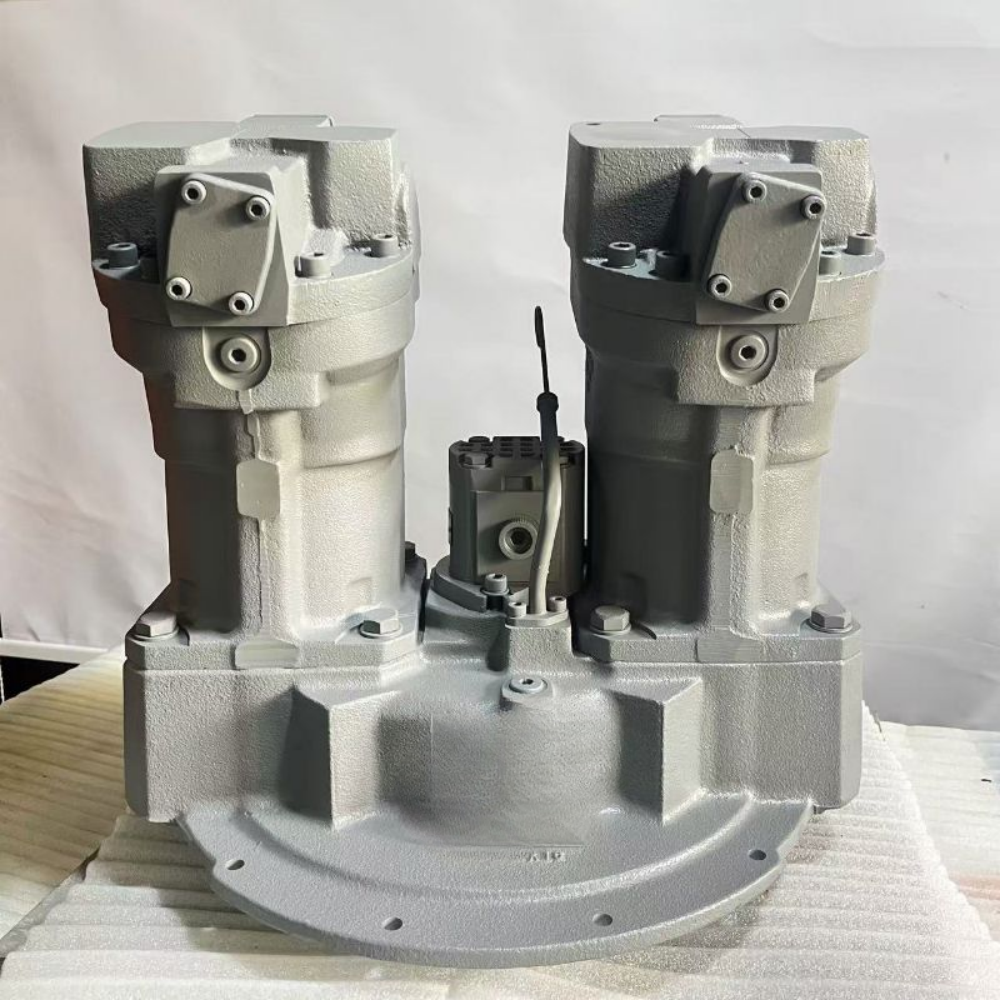
Before replacing a main hydraulic pump, field technicians and workshop managers must confirm that performance degradation stems from the pump itself rather than faulty main relief valves, clogged suction strainers, or defective pilot control circuits.
Observed Symptom → Check Suction Line & Filters → Measure Pilot Pressure → Perform Hydraulic Flow/Pressure Test → Differentiate Fault
Use the diagnostic reference matrix below to evaluate machine symptoms:
| Observed Symptom | Primary Mechanical Root Cause | Field Inspection & Diagnostic Steps | Recommended Action |
|---|---|---|---|
| Slow Cycle Times Across All Functions | Internal fluid bypass caused by worn valve plate or piston shoe clearance. | Measure pump outlet pressure under full stall load. Check hydraulic oil temperature rise. | Replace worn valve plate and barrel or install new main pump assembly. |
| High-Pitched Whining or Growling Sound | Cavitation: Air suction or oil starvation due to restricted inlet strainer or crushed suction hose. | Inspect suction line O-rings and inlet filter for clogging. Check fluid for foaming. | Clean suction line, replace filters, and check hydraulic oil viscosity standards. |
| Knocking or Metallic Grinding Noise | Mechanical destruction of drive shaft bearings, broken piston slippers, or metal debris. | Shut machine down immediately. Drain pump case drain filter and check for brass or steel shavings. | Complete pump overhaul or full assembly replacement. Flush complete hydraulic system. |
| Hydraulic System Overheating (>85°C) | Excessive internal leakage slipping past worn cylinder block faces, converting pressure energy into friction heat. | Use an infrared pyrometer to measure temperature gradient between pump inlet and case drain line. | High case drain temperature confirms internal bypass. Relock or replace pump. |
| Jerky or Unstable Actuator Motion | Sticking swashplate control piston, faulty proportional solenoid valve, or damaged wiring harness. | Test pilot control signals to pump regulators. Inspect electrical connections for corrosion. | Clean pilot regulator spool; inspect or replace the hydraulic pump wiring harness. |
⚠️ Warning: Operating an excavator with a cavitating hydraulic pump will destroy the internal bronze valve plate coating within hours. Air bubbles collapsing under 350-bar pressure create micro-implosions that pit metal surfaces and contaminate the entire oil loop with fine metal particles.
OEM vs. Factory-Direct Aftermarket vs. Low-Grade Knockoffs
Wholesale procurement decision-makers face constant pressure to protect profit margins while guaranteeing part longevity for downstream buyers and repair shops. Understanding the structural differences across pump sourcing tiers is essential:
| Item | Detail |
|---|---|
| Tier 1 | OEM (Original Equipment Manufacturer) → Highest Cost |
| Tier 2 | Factory-Direct Aftermarket (Hongtengda) → Direct Pricing |
| Tier 3 | Low-Grade Rebuilt / Sub-Par Knockoffs → Cheap Material |
| Evaluation Benchmark | OEM Original Pump |
| :— | :— |
| Raw Material Quality | Ductile iron housing, carburized HRC 60 steel pistons, bi-metal valve plate. |
| Machining Tolerance | Cylinder block bore tolerances within 0.005–0.01 mm; valve plate runout ≤0.01 mm. |
| Quality Testing Standards | 100% full-load hydraulic bench testing and pressure impulse verification. |
| Wholesale Profit Margin | Squeezed margins due to multi-tier dealer distribution markups. |
| Warranty & Technical Support | Standard 6–12 months, rigid claim process. |
When repairing existing pump units where housings remain intact, stocking a genuine-spec Hitachi main hydraulic pump repair kit allows workshop technicians to replace worn barrels, pistons, and seal groups at a fraction of full-assembly replacement cost.
Replacement, Flushing, and Commissioning Protocols

Improper installation causes over 50% of replacement hydraulic pump failures. Procurement managers should provide technicians with a standardized installation protocol to prevent dry-start seizure and immediate fluid contamination.
Step 1: Drain & Flush System Lines → Step 2: Mount Pump & Connect Fittings → Step 3: Prime Pump Case with Clean Oil → Step 4: Bleed Air & Low-Idle Break-In
- Mandatory Hydraulic System Flushing: If the previous pump suffered catastrophic internal breakdown, metal fragments are scattered throughout the main control valve, hydraulic cylinders, cooler, and return lines. Installing a new pump without flushing the system and replacing all filter elements will force metal shrapnel back into the new pump, destroying it within minutes.
- Case Priming (Crucial Step): Never start a newly installed hydraulic pump dry. Before connecting the main case drain hose, pour clean, filtered hydraulic oil directly into the pump casing through the top drain port until full. This lubricates the swashplate cradle bearings and piston shoes during initial engine crank.
- System Air Bleeding: Loosen the air vent plug on top of the pump housing. Crank the engine on starter power (without starting) until bubble-free hydraulic oil flows from the vent, then torque the plug securely.
- Low-Idle Break-in Procedure: Start the excavator engine and run at low idle (800–1000 RPM) with zero joystick movement for 10 to 15 minutes. Monitor case drain lines for leaks and listen for abnormal air noise. Gradually operate boom and arm cylinders through full stroke under no load to purge remaining air before applying heavy digging pressure.
Pro Tip: Always verify that replacement hydraulic oil meets ISO 11158 standards. Use ISO VG46 fluid for standard ambient temperatures (-10°C to 40°C) and ISO VG68 fluid for extreme high-heat or desert operating conditions.
Wholesale Procurement Inspection Checklist for Parts Buyers
When receiving bulk shipments of replacement hydraulic pumps, procurement teams should execute this 6-point verification checklist before accepting inventory into the warehouse:
- Packaging & Corrosion Protection: Confirm pump is sealed in vapor-corrosion-inhibitor (VCI) anti-rust film with all hydraulic ports capped with heavy-duty plastic plugs.
- Flange & Shaft Inspection: Verify input drive shaft splines (tooth count, pitch, and diameter) and mounting flange dimensions against OEM specification sheets.
- Rotational Smoothness: Turn the main shaft by hand (using a smooth wrench adapter); rotation must be smooth without binding, tight spots, or axial play.
- Port Threads & O-Ring Seats: Check split-flange bolt holes and threaded pilot ports (SAE / BSPP) for clean, burr-free threads.
- Factory Test Certification: Confirm each unit includes a factory hydraulic bench test sheet certifying flow rate, pressure retention, and volumetric efficiency.
- Supplier Quality Credentials: Ensure the manufacturer operates an audited factory quality testing facility with ISO 9001 quality management certification.
Frequently Asked Questions (FAQs)
What is the average lifespan of an excavator hydraulic main pump?
Under proper maintenance conditions—including regular hydraulic oil changes every 1,000 to 2,000 operating hours and filter replacements every 250 to 500 hours—a high-quality excavator main hydraulic pump typically delivers between 8,000 and 12,000 operating hours before requiring major rebuilding or replacement.
Can I replace a variable-displacement piston pump with a fixed gear pump?
No. Main hydraulic systems on modern excavators require variable-displacement control to match engine horsepower, manage multi-function oil distribution, and conserve fuel. Replacing a main axial piston pump with a fixed gear pump will cause severe engine stalling, system overheating, and loss of proportional control.
How do I identify the exact hydraulic pump model for my excavator?
Cross-reference three items: the excavator model and serial number, the pump manufacturer’s nameplate stamping (e.g., Kawasaki K3V112DT, Hitachi HPV118, or Komatsu HPV95), and the OEM part number listed in the machine parts manual.
Streamline Your Heavy Machinery Parts Sourcing with Hongtengda
Navigating complex machinery replacement parts requires a trusted manufacturing and supply chain partner. Hongtengda Parts delivers factory-direct, OEM-compatible excavator hydraulic pumps, final drives, computer boards, and electrical assemblies engineered for global heavy equipment operators and parts wholesalers.
- Factory-Direct Pricing: Eliminate intermediary distributor markups and maximize wholesale profit margins.
- Rigorous Quality Control: Every pump assembly undergoes 100% factory hydraulic pressure testing prior to shipment.
- Extensive Compatibility: Full product catalog covering Hitachi, Caterpillar, Komatsu, Kobelco, SANY, Volvo, and Hyundai excavators.
- Rapid Global Dispatch: Secure export packaging and stable inventory stocking for immediate international delivery.
Contact our technical sales team today to request a wholesale price catalog or discuss custom procurement requirements for your inventory.