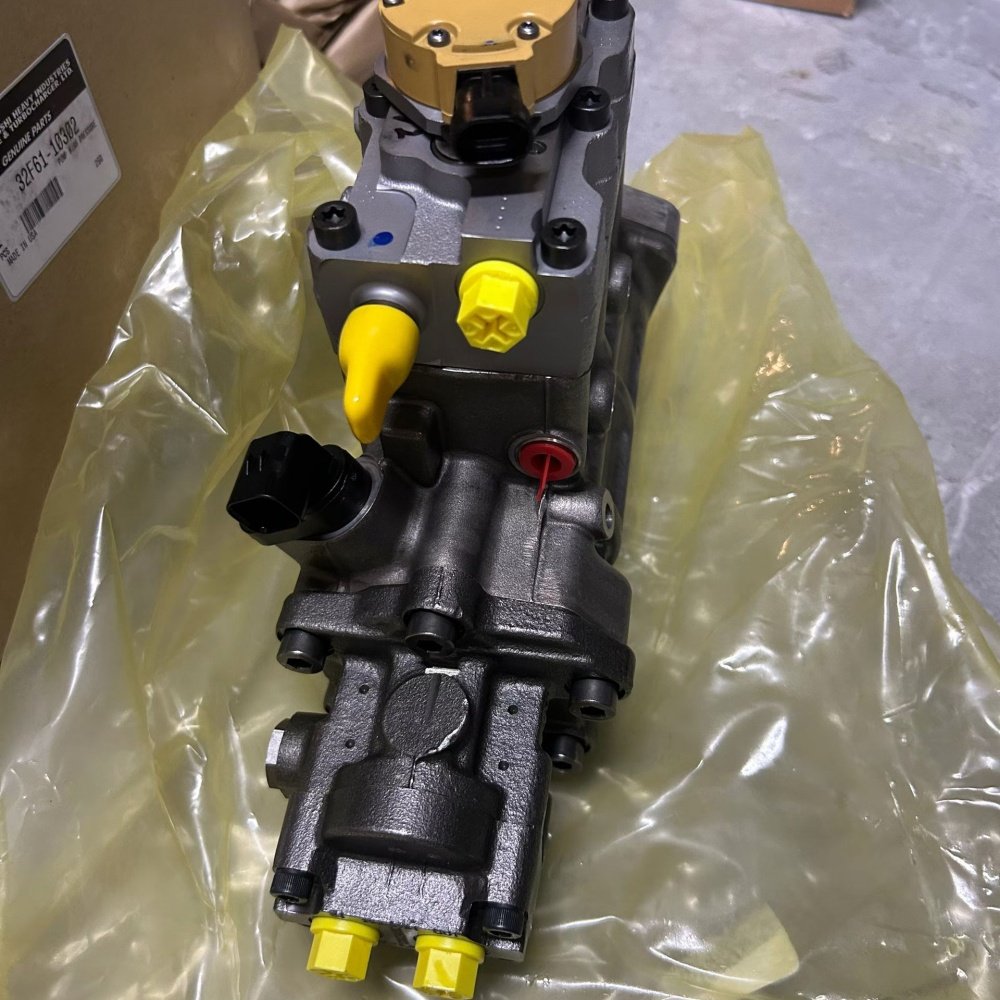
When an earthmoving machine stalls in the middle of a high-production mining trench or civil excavation site, the root cause frequently leads back to the fuel delivery network. In modern heavy earthmoving machinery, an excavator diesel pump failure does not merely halt a single engine—it paralyzes hauling schedules, delays crushing operations, and incurs severe penalties on multi-million dollar infrastructure projects.
Achieving total operational reliability requires maintenance directors and fleet procurement managers to understand how fuel supply components function under grueling site conditions. Modern excavation engines rely on a two-stage pressure cascade: a low-pressure feed pump that pulls fuel from the tank, and a high-pressure common rail (HPCR) injection supply pump that atomizes diesel at pressures exceeding 2,000 bar. Selecting the correct replacement pump requires rigorous attention to electrical voltage, flow consistency, metallurgy, and OEM cross-referencing.
This benchmark guide outlines the engineering architecture of heavy machinery diesel pumps, details step-by-step failure diagnostic protocols, establishes a B2B procurement matrix, and provides commissioning guidelines for fleet maintenance teams.
Understanding Excavator Diesel Pump Architecture: Feed Pumps vs. HPCR Systems
To accurately diagnose fuel delivery issues and source the correct replacement parts, procurement specialists must differentiate between the low-pressure supply circuit and the high-pressure injection circuit. Each stage performs a distinct mechanical function and carries precise engineering tolerances.
Low-Pressure Fuel Feed / Transfer Pumps
The fuel feed pump (also called a lift pump or fuel transfer pump) serves as the primary suction and delivery unit. It draws fuel from the main storage tank, forces it through the primary water separator and secondary micron filters, and maintains a continuous positive head pressure at the inlet of the high-pressure injection pump.
Low-pressure fuel transfer pumps on heavy excavators operate under strict performance parameters:
- Operating Voltage: Standard heavy excavators (20-ton to 90-ton classes) utilize 24 VDC electrical systems, whereas compact or mini excavators operate on 12 VDC circuits. Matching system voltage is critical to prevent motor winding burnout or insufficient fuel delivery.
- Delivery Flow Rate: Industrial feed pumps must deliver 80 to 120 liters per hour (L/h) under full engine load. Larger powerplants, such as those covered in the CAT 336 Electronic Fuel Pump 509-4649 24V specification for Perkins C7.1 engines, require continuous positive pressure delivery up to 3.7 L/min to prevent high-pressure supply pump cavitation.
- Delivery Pressure Range: Low-pressure circuits maintain a stable output between 0.5 bar and 1.5 bar (7 to 22 PSI) on electric priming units, while mechanical trochoid transfer pumps integrated into supply housing can generate up to 8.5 bar (850 kPa) internal feed pressure.
- Ingress & Protection Standard: Heavy equipment pumps operating in high-dust and high-moisture environments require an IP65 or IP67 ingress protection rating to seal internal armatures against fine abrasive silica and water washdowns.
High-Pressure Common Rail (HPCR) Injection Supply Pumps
The high-pressure fuel injection pump receives pre-filtered fuel from the transfer stage and compresses it for distribution into the common fuel rail. Driven directly by the engine timing gear train, HPCR supply pumps employ hardened alloy plungers housed within high-density cast iron or forged steel bodies.
Key technical benchmarks for high-pressure injection pumps include:
- Sustained Operating Pressure: Modern Tier 4 Final and Stage V heavy excavation engines operate at sustained common rail pressures between 1,600 bar and 2,050 bar (23,200 to 29,700 PSI).
- Peak Pressure Rating: Premium supply pumps feature burst-tested housing designs capable of withstanding peak pressure spikes up to 2,500 bar.
- Flow Regulation via SCV: Rail pressure is dynamically metered by an electronic Suction Control Valve (SCV) mounted on the pump housing. The SCV regulates the precise volume of fuel entering the compression chambers based on signals from the engine control module (ECM).
- Design Service Life Target: Heavy-duty HPCR supply pumps are engineered for a B10 service life target of 10,000 to 15,000 operating hours when supplied with clean, water-free diesel fuel.
5 Field Symptoms of Excavator Diesel Pump Failure & Diagnostic Protocols
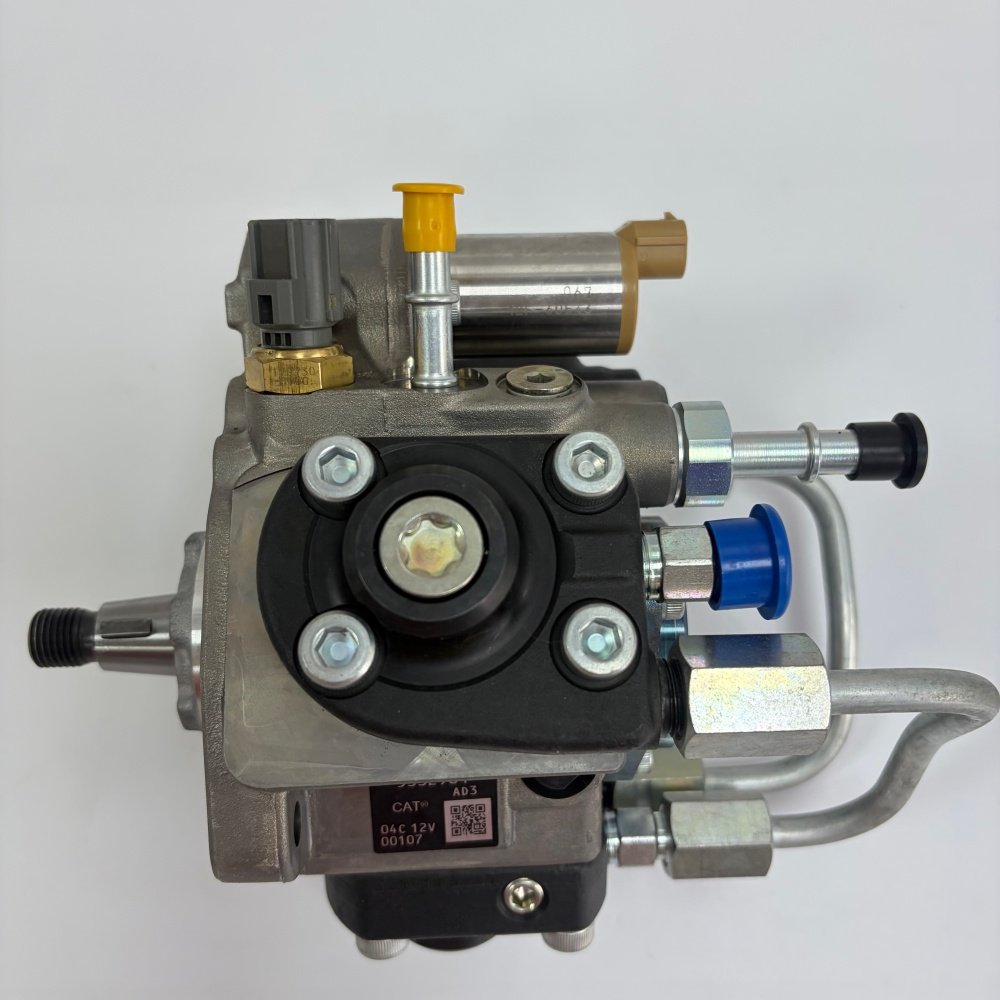
Unplanned downtime can be drastically reduced when equipment operators and field technicians recognize early warning signs of fuel pump degradation. Because hydraulic system faults can sometimes mimic engine power loss, technicians should execute a systematic diagnostic workflow before ordering replacement components.
| Symptom | Primary Root Cause | Verification Test Method | Recommended Action |
|---|---|---|---|
| Hard Starting / Extended Cranking | Weak lift pump motor, air ingress on suction side, or worn check valve | Clear hose bubble-check test & low-pressure gauge verification (reading below 0.5 bar) | Reseal suction line O-rings; replace low-pressure electric feed pump |
| Power Loss Under Heavy Digging Load | Insufficient transfer flow or worn HPCR pump plungers unable to sustain rail pressure | ECM log check for low fuel rail pressure codes (e.g., P0087); pressure transducer logging | Replace fuel filter elements; conduct high-pressure pump flow-bench test |
| Engine Sputtering & Unstable Idle | Contaminated or sticking Suction Control Valve (SCV), causing rail pressure fluctuation | Oscilloscope or diagnostic tool check on SCV duty cycle signal; rail pressure ripple check | Clean or replace SCV assembly; flush fuel rail system |
| High-Pitched Whining / Cavitation Noise | Restricted fuel filter inlet, air suction past seals, or pump internal bearing wear | Vacuum gauge test on suction side; acoustic inspection with stethoscope | Inspect tank pickup screen; replace clogged fuel filters or pump assembly |
| Excessive Black Smoke & Engine Hesitation | Loss of fuel atomization pressure due to internal pump leakage or stuck plungers | Injector return flow measurement & high-pressure pump dead-head pressure check | Inspect pump plunger clearance; replace HPCR supply pump assembly |
Pro Tip: Always perform a low-pressure suction vacuum test before condemning a high-pressure common rail injection pump. In over 35% of field troubleshooting cases, a restriction in the tank pickup screen or an air leak at the primary water separator O-ring causes symptoms that closely resemble a total high-pressure pump failure.
Diagnostic Step 1: Low-Pressure Fuel Delivery & Air Bubble Test
To confirm whether a feed pump is supplying sufficient volume, install a inline pressure gauge between the final fuel filter outlet and the HPCR supply pump inlet. Turn the ignition key to the ON position (or engage the manual priming pump). The gauge must register steady pressure within 10 seconds.
To test for vacuum leaks, insert a section of transparent fuel-grade hose on the suction side. If continuous streams of micro-bubbles appear while the engine cranks, air is entering the system past cracked fittings, degraded hand-primer diaphragms, or loose filter housing seals.
Diagnostic Step 2: High-Pressure Fuel Rail Leak-Down Check
If the engine cranks normally but fails to start, verify whether the HPCR supply pump reaches minimum starting threshold pressure (typically 250 bar to 350 bar). Connect a diagnostic scanner to monitor the Fuel Rail Pressure (FRP) sensor during cranking. If rail pressure remains below 200 bar, check the high-pressure pump return line. Excessive return flow during cranking confirms internal plunger wear or blow-by past the internal pressure relief valve.
OEM Cross-Reference & Specification Benchmarks for Major Excavator Engine Families
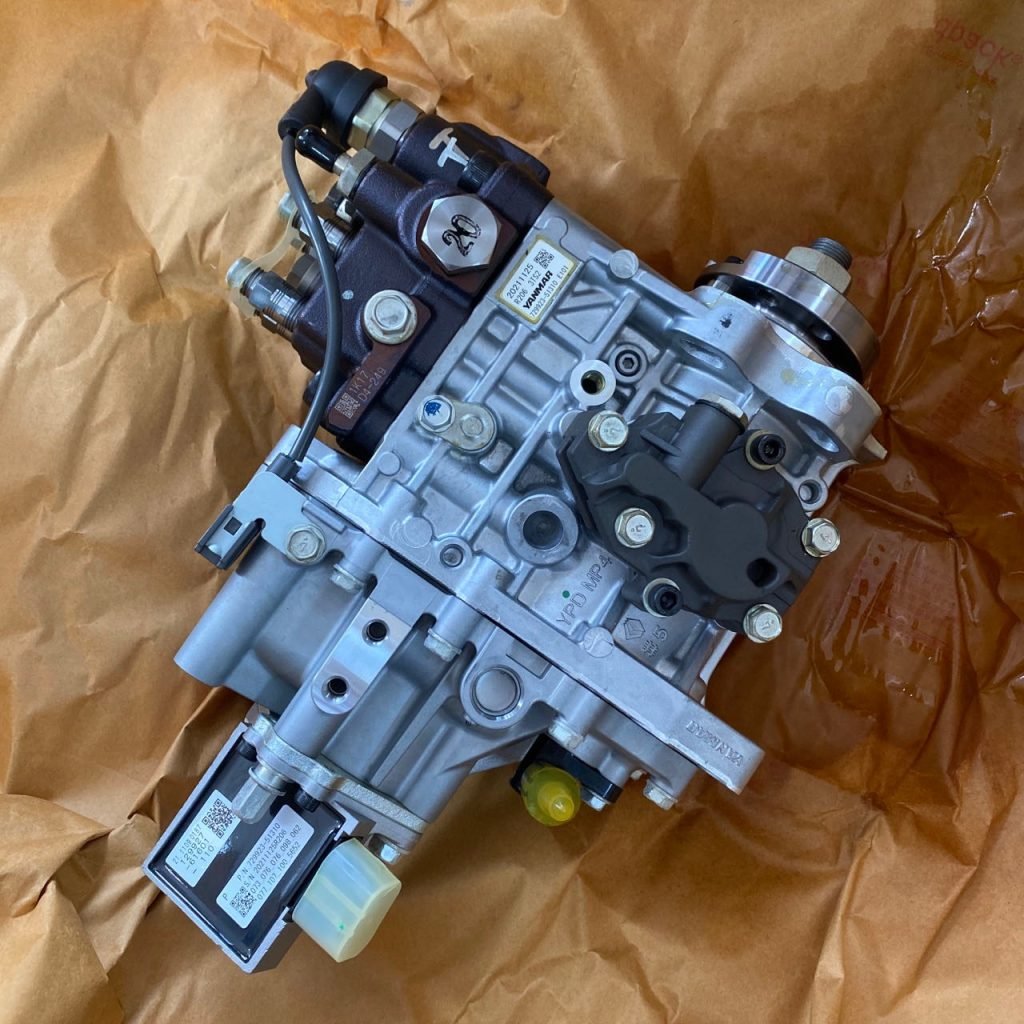
Procurement teams managing multi-brand fleets require verified cross-referencing between heavy equipment brand part numbers and original component manufacturer (Denso, Bosch, Delphi) designations.
Fuel Storage Tank
▼ (Suction Hose / Pre-Filter) Low-Pressure 24V Lift Pump (0.5–1.5 bar output) ▼ (Main Filter & Water Separator) HPCR Supply Pump & SCV (Metering via ECM) ▼ (1,600–2,050 bar High-Pressure Rail) Common Rail Injectors ► Engine Combustion Chamber
The table below details core specification parameters and OEM part numbers for widely deployed excavation engine platforms:
| Engine Model | Typical Excavator Models | Component Type | Original Part Numbers | Key Specification Parameter |
|---|---|---|---|---|
| Isuzu 4HK1 | Hitachi ZX200-3 / ZX200-5G, JCB JS220 | HPCR Supply Pump | Denso 294000-0260 / Isuzu 8973288860 | Trochoid feed pump integrated; 200 MPa rail pressure rating |
| Isuzu 4HK1 / 6HK1 | Hitachi ZX200-5A / ZX330-5G / ZX470-5G | Electric Lift Pump | Isuzu 8-98009397-2 / Hitachi YA00068071 / YA00065646 | 24 VDC; flow rate ≥80 L/h; delivery pressure 0.5–1.5 bar |
| Isuzu 6HK1 | Hitachi ZX330-3 / ZX350-5G, Sany SY365 | HPCR Supply Pump | Denso 294050-0021 / Isuzu 9876020491 | Heavy-duty dual plunger design; pre-calibrated gear lash |
| CAT C7.1 / Perkins | Caterpillar CAT 336 / CAT 330, AP1055F | Electronic Fuel Pump | CAT 509-4649 / 476-8769 / 20R-1636 | 24 VDC; continuous flow 3.7 L/min max; 8,500 kPa peak delivery |
| Komatsu SAA6D107E | Komatsu PC200-8 / PC220-8 | HPCR Supply Pump | Bosch 0445020109 / Komatsu 6754-71-1012 | 1,600 bar sustained pressure; SCV pre-mounted |
When sourcing components for specialized fleet maintenance, review complete technical guidelines such as the Sourcing Hitachi Excavator Replacement Components resource to verify exact engine serial number prefixes and mounting bracket configurations.
B2B Procurement Framework: Evaluating OEM vs. Factory-Direct Aftermarket vs. Low-Tier Knockoffs
Procurement managers face constant pressure to reduce Total Cost of Ownership (TCO) without exposing heavy equipment to premature failure. Sourcing diesel pumps requires evaluating manufacturing quality, testing transparency, and warranty backing across three primary supplier categories.
| Evaluation Metric | Genuine OEM | Factory-Direct Aftermarket (e.g., Hongtengda) | Low-Tier Sub-Supplier / Knockoffs |
|---|---|---|---|
| Dimensional & Fitment Parity | 100% exact OEM match | 100% exact OEM dimensional parity | Inconsistent bolt patterns; incorrect port thread pitch |
| Plunger & Housing Metallurgy | Forged steel / HRC 60+ hard chrome | High-density ductile iron / precision ground alloy | Low-density die-cast aluminum; unhardened plungers |
| Quality Control & Testing | 100% automated bench tested | 100% factory flow-bench & pressure hold tested | Spot checks or zero fluid pressure testing |
| Delivery Lead Time | 4 to 12 weeks backorder common | Immediate stock shipment (1–3 days) | Unpredictable shipping; frequent supply chain delays |
| Price Benchmark | 100% baseline (highest cost) | 35% to 55% TCO savings versus OEM list | 70% to 80% discount (extreme risk of machine damage) |
| Warranty & Support | 6–12 months standard | 12 months factory warranty with direct technical support | Limited or non-existent warranty response |
⚠️ Warning: Beware of sub-tier aftermarket pumps that use unhardened plunger steel or low-grade rubber seals. Inferior seal compounds degrade rapidly when exposed to Ultra-Low Sulfur Diesel (ULSD) or biodiesel blends above B20. Degraded internal seals release microscopic elastomer particles directly into high-pressure fuel rails, causing catastrophic injector seizure that can cost over $8,000 in engine repairs.
Key Procurement Red Flags
When evaluating suppliers for fleet replacement parts, reject quotes that exhibit any of the following deficiencies:
- Unverified Test Certification: Suppliers unable to provide individual flow-bench calibration sheets or pressure hold reports for HPCR supply pumps.
- Missing Ingress Protection Documentation: Electric transfer pumps lacking verified IP65 sealing credentials for 24V equipment applications.
- Improper Packaging & Dust Caps: Fuel pumps shipped without sealed protective caps over inlet/outlet ports. Microscopic dust entering an unsealed pump during transport will instantly score precision plungers upon first start.
For broader fleet maintenance strategies, fleet directors can consult the comprehensive Excavator Replacement Parts Selection & Maintenance Guide to align fuel system replacements with scheduled 250-hour and 500-hour service intervals.
Step-by-Step Replacement, Installation, & Commissioning Guidelines
Installing a replacement excavator diesel pump requires strict adherence to clean-room standards. High-pressure common rail clearance tolerances between internal plungers and barrels are smaller than 2 microns (0.002 mm)—meaning a single grain of windblown dust can cause immediate scoring and pressure loss.
Depressurize Fuel Rail & Disconnect Battery
Clean Pump Exterior & Surrounding Engine Block Unbolt Old Pump & Inspect Engine Timing Gear Lash Install New Pump with Fresh O-Rings (Torque to Spec) Bleed Low-Pressure System via 24V Priming Circuit Conduct No-Leak Crank Test & Log Rail Pressure
Step 1: Depressurization and Environmental Decontamination
- Turn off the engine master switch and disconnect the machine’s 24V battery ground cable.
- Wait a minimum of 15 minutes after engine shutdown to allow high-pressure fuel rail residual pressure to naturally bleed down below 10 bar.
- Thoroughly steam-clean or wash down the pump housing, fuel lines, and surrounding engine block using a non-chlorinated brake/parts cleaner. Blow the area completely dry with compressed air before loosening any fittings.
Step 2: Mechanical Removal and Timing Alignment
- Disconnect the electrical harness connector from the Suction Control Valve (SCV) and low-pressure pressure sensors.
- Disconnect low-pressure fuel supply and return lines, immediately capping open fittings with clean plastic plugs.
- Remove the high-pressure steel delivery pipe connecting the pump to the fuel rail. Discard one-time-use high-pressure sealing washers.
- Unbolt the pump mounting flange bolts. Carefully slide the pump back from the engine timing gear cover, taking care not to drop internal drive keys or gear shims into the timing case.
Step 3: Precision Installation and Fastener Torquing
- Lubricate the new pump mounting nose O-ring with clean diesel fuel or engine oil assembly lube.
- Align the drive gear keyway with the engine timing gear train. Insert the pump smoothly into the mounting bore without forcing.
- Tighten mounting flange bolts in a cross-pattern to the manufacturer’s specified torque (typically 35 to 45 Nm for M8 fasteners).
- Install new high-pressure delivery pipes, hand-tightening union nuts first to ensure correct thread alignment before applying final torque wrench tightening (typically 25 to 30 Nm).
Step 4: System Priming, Air Bleeding, and Initial Commissioning
- Reconnect low-pressure fuel hoses and electrical harness plugs.
- Turn the key switch to ON to energize the 24V electric fuel transfer pump. Open the manual bleed screw on the main fuel filter head until air-free fuel flows steadily, then tighten the bleed screw.
- Do not crank the engine continuously for more than 15 seconds. Allow the starter motor to cool for 2 minutes between cranking cycles.
- Once the engine starts, allow it to idle at 800 RPM for 5 minutes. Inspect all low-pressure and high-pressure joints for fuel leaks.
- Connect a diagnostic tool to verify that actual fuel rail pressure matches target fuel rail pressure across low idle, high idle, and full hydraulic stalling loads.
Frequently Asked Questions (FAQ)
What is the primary difference between a 12V and 24V excavator fuel pump?
A 12V fuel pump is engineered for compact utility equipment operating on single-battery electrical systems, whereas a 24V fuel pump is designed for medium-to-heavy excavators (20-ton to 90-ton classes) running dual-battery 24 VDC series architectures. Connecting a 12V pump to a 24V circuit will cause immediate motor winding overheating and electrical failure, while running a 24V pump on a 12V circuit results in insufficient flow and low pressure.
How often should fuel filters be replaced to protect the diesel pump?
Primary fuel filters and water separators should be replaced every 250 operating hours, and secondary high-efficiency micron filters every 500 operating hours. In high-dust mining operations or regions with inconsistent fuel quality, filter replacement intervals should be shortened to 150 hours to prevent abrasive particulate passage into the high-pressure supply pump.
Can I replace just the Suction Control Valve (SCV) instead of the whole HPCR pump?
Yes, if diagnostic troubleshooting confirms that high-pressure rail delivery is unstable (engine hunting or surging at idle) while physical internal plunger wear is minimal, replacing the SCV is a cost-effective repair. However, if diagnostic checks reveal metal shavings in the fuel filter or return line, the entire supply pump assembly and fuel rail system must be replaced and flushed immediately.
What storage precautions are required for spare diesel pumps kept in fleet warehouses?
Spare fuel pumps should be stored in climate-controlled environments between 15°C and 25°C with relative humidity below 60%. All factory shipping caps over fuel inlet, outlet, and return ports must remain tightly sealed until installation. Unsealed pumps stored in damp warehouse environments risk internal plunger surface oxidation within as little as 30 days.
Partnering with Hongtengda Parts for Factory-Direct Fleet Sourcing
Maintaining fleet productivity requires access to heavy machinery components that deliver OEM performance without backorder delays. As a specialized manufacturer and global distributor of excavator components since 2001, Hongtengda Parts supplies a complete selection of low-pressure electric fuel transfer pumps, main hydraulic axial piston pumps, computer control boards, and planetary final drive gear series for Hitachi, Caterpillar, Komatsu, and Kobelco machinery.
Every replacement diesel pump supplied by Hongtengda undergoes 100% factory flow-bench testing and pressure-hold verification, ensuring complete fitment parity and immediate jobsite reliability.
To request a factory-direct quote or verify OEM cross-reference part numbers for your machinery fleet, contact our engineering support team at Hongtengda Parts.