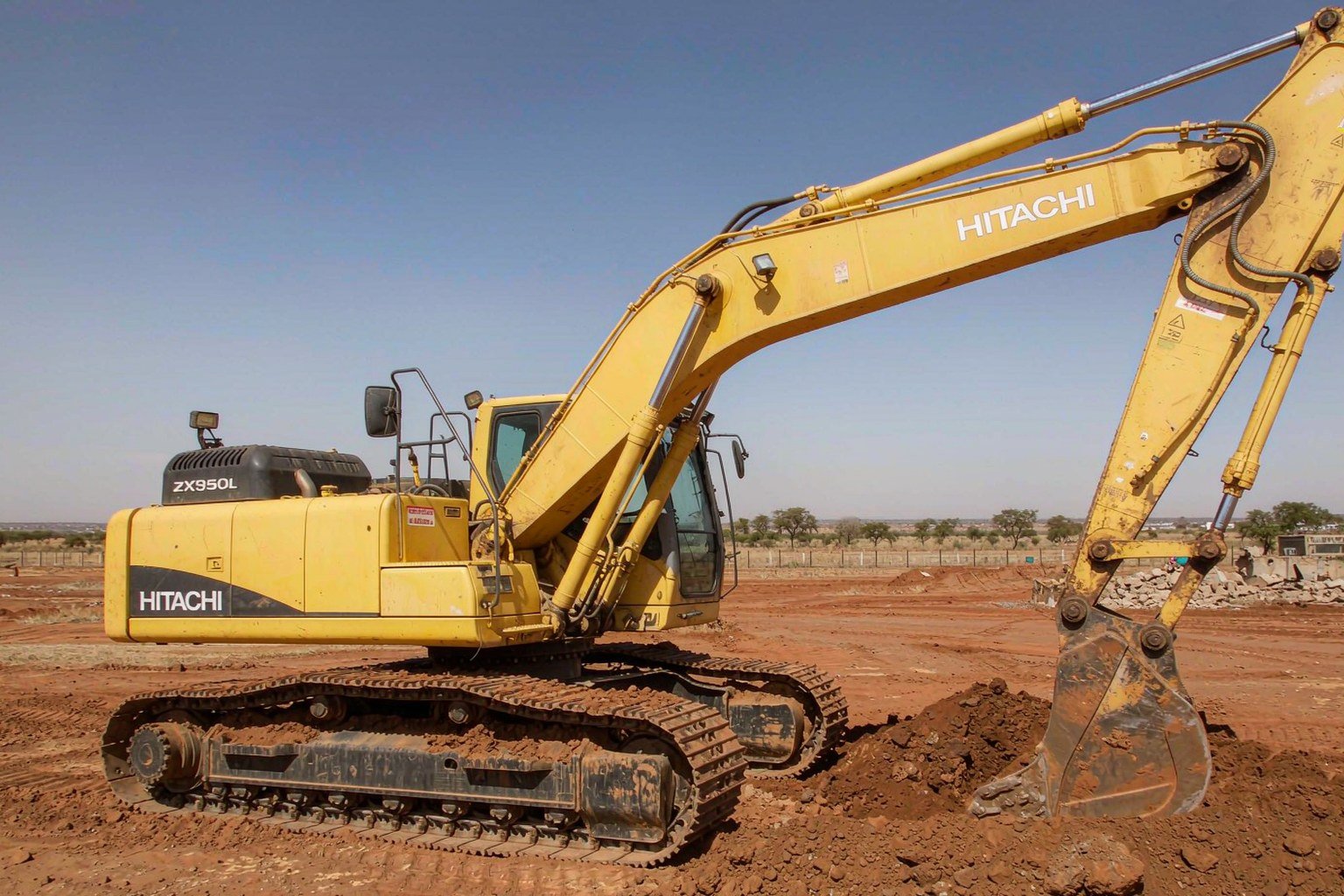
If you have ever replaced seals, filters, pumps and bearings on an excavator only to watch the hydraulic oil temperature climb again an hour into the shift, you are not alone. It is one of the most frustrating faults in the workshop: every wearable part is new, yet the gauge keeps climbing past 85 °C, the oil turns dark, and the machine slows down like it is walking through mud. Before you tear the pump apart again, look at two small parts most people never inspect — the hydraulic check valves (item No.02 and No.09 on the system drawing). When they stick open, hot oil bypasses the radiator and returns straight to the tank, and no amount of new seals will fix that.
1. How Hydraulic Check Valves Protect Your Cooling System
Most operators understand the big components: the hydraulic pump, the main control valve, the cylinders and the radiator. But between the return line and the oil tank sit two small check valves that act as gatekeepers for the entire cooling circuit.
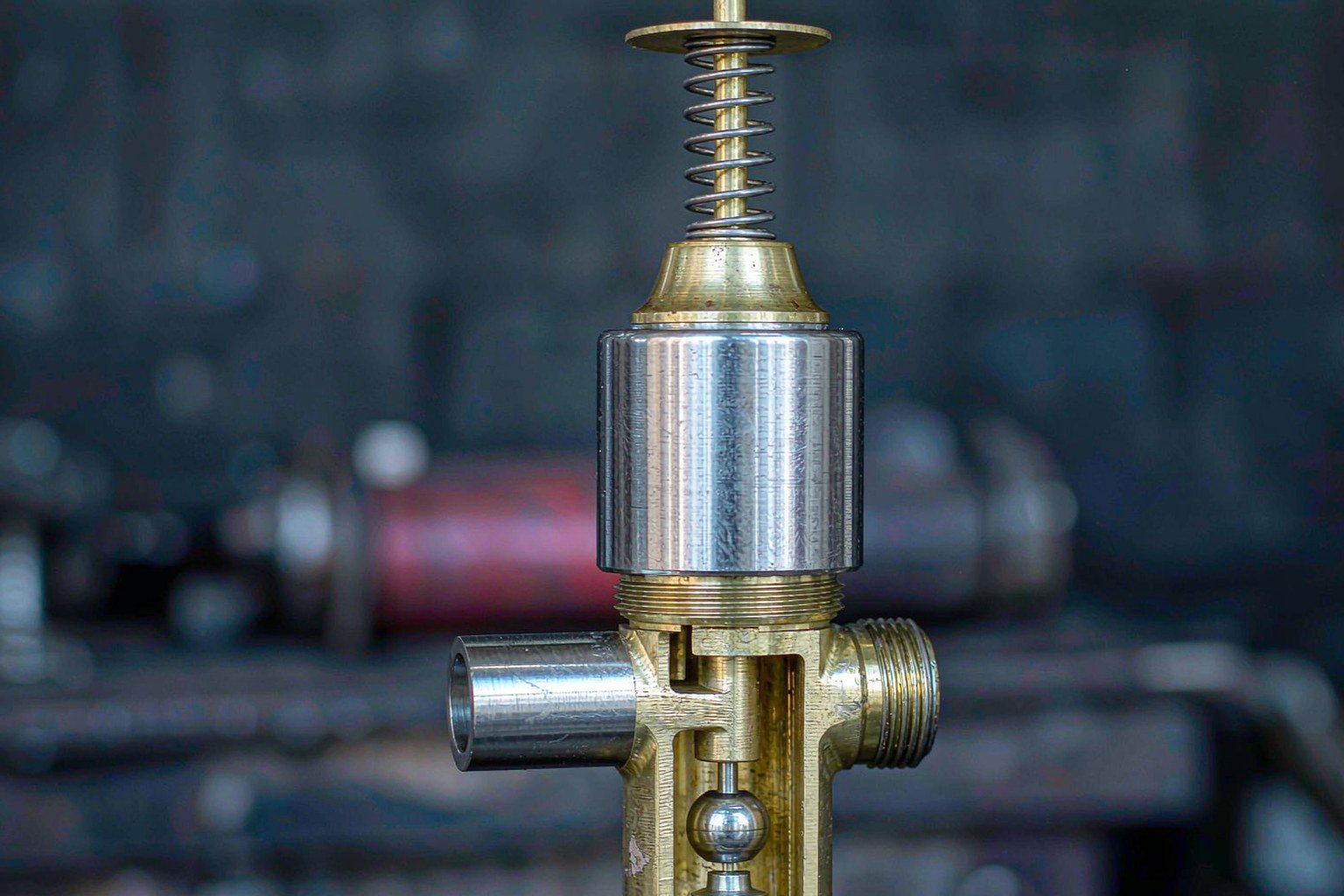
Here is how they work. When the hydraulic pump is running, the high pressure generated inside the pump pushes open the check valves, and hydraulic oil flows through the lines to the main control valve to power the boom, arm, bucket and travel. Once the pump stops or system pressure drops, the check valves close automatically under the combined force of their internal spring and reverse oil pressure. That closure cuts the oil circuit in time and prevents high-pressure oil from flowing back to the tank or the suction side.
In the return line, the check valves are arranged in parallel with the hydraulic oil cooler (radiator). Under normal conditions, return oil passes through the cooler, where aluminum fins and fan airflow strip away heat. The check valves only open as a bypass when the pressure difference across the cooler exceeds a set value — typically around 0.185 MPa — protecting the delicate cooler core from cold-oil pressure spikes at startup. As soon as the oil warms up and flows freely, the bypass closes and the oil routes back through the radiator.
If you want to understand the pressures the main pump generates and how they interact with the cooling circuit, our excavator hydraulic pump buyer’s specification guide breaks down the numbers.
2. The Real Cost of High Oil Temperature
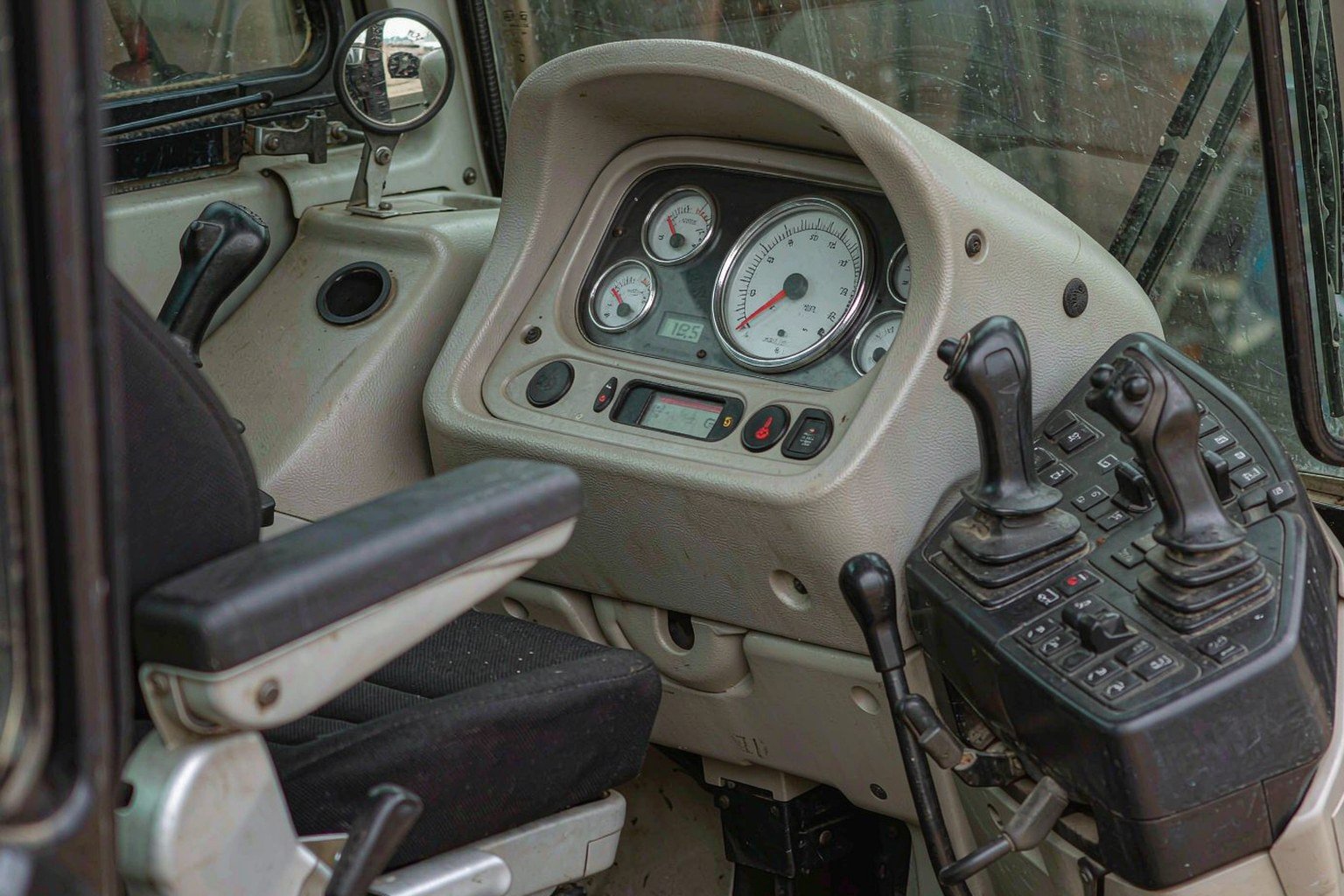
In a healthy excavator, hydraulic oil should run between 50 °C and 70 °C. When it climbs above 85 °C (185 °F), the oil film between moving parts starts to break down, viscosity drops, and dynamic seals begin to harden and crack. Above 90 °C, warning lamps trigger and the operator smells burnt oil. At 106 °C, some machines will alarm and de-rate automatically.
The damage does not stop at the gauge. Hot oil oxidizes faster — roughly doubling its oxidation rate for every 10 °C rise — turning the fluid dark brown or black and producing varnish that sticks to spools and valve bores. Pump internal slippage increases, cylinders slow down, and seal failures multiply. In short, overheating is a symptom of system inefficiency, and wasted pressure energy is converted directly into heat.
| 症状 | What the operator notices | What is happening inside the system |
|---|---|---|
| Slow, weak operation | Boom and arm move sluggishly after midday | Oil viscosity drops; pump and motor internal slippage increases |
| High-pitched whine | Loud growl from the pump housing | Hot oil thins out, worsening cavitation and gear wear |
| Burnt oil smell / dark fluid | Dipstick shows black oil; acrid smell | Oil oxidation and chemical breakdown accelerate above 85 °C |
| Warning lamp / alarm | Dashboard hydraulic high-temp light triggers | Temperature sensor hits 85–90 °C threshold |
| Sudden seal failures | Rod seals, valve spools and motor shaft seals leak | Heat hardens rubber; seals crack and lose elasticity |
| 燃油消耗增加 | Machine burns more diesel for the same work | Pump works harder to compensate for lost pressure and flow |
For a comprehensive technical breakdown of heat generation sources in excavator hydraulics, the hydraulic oil overheating troubleshooting guide at Mecatra covers cooler efficiency, pump case-drain flow tests and relief-valve hotspots in detail.
3. The Hidden Culprit — When Check Valves Stick Open
Because the check valves are small and often buried at the bottom of the return filter housing, they are easy to overlook. Yet they are a primary cause of persistent high oil temperature — especially on machines where every other wearable part has already been replaced.
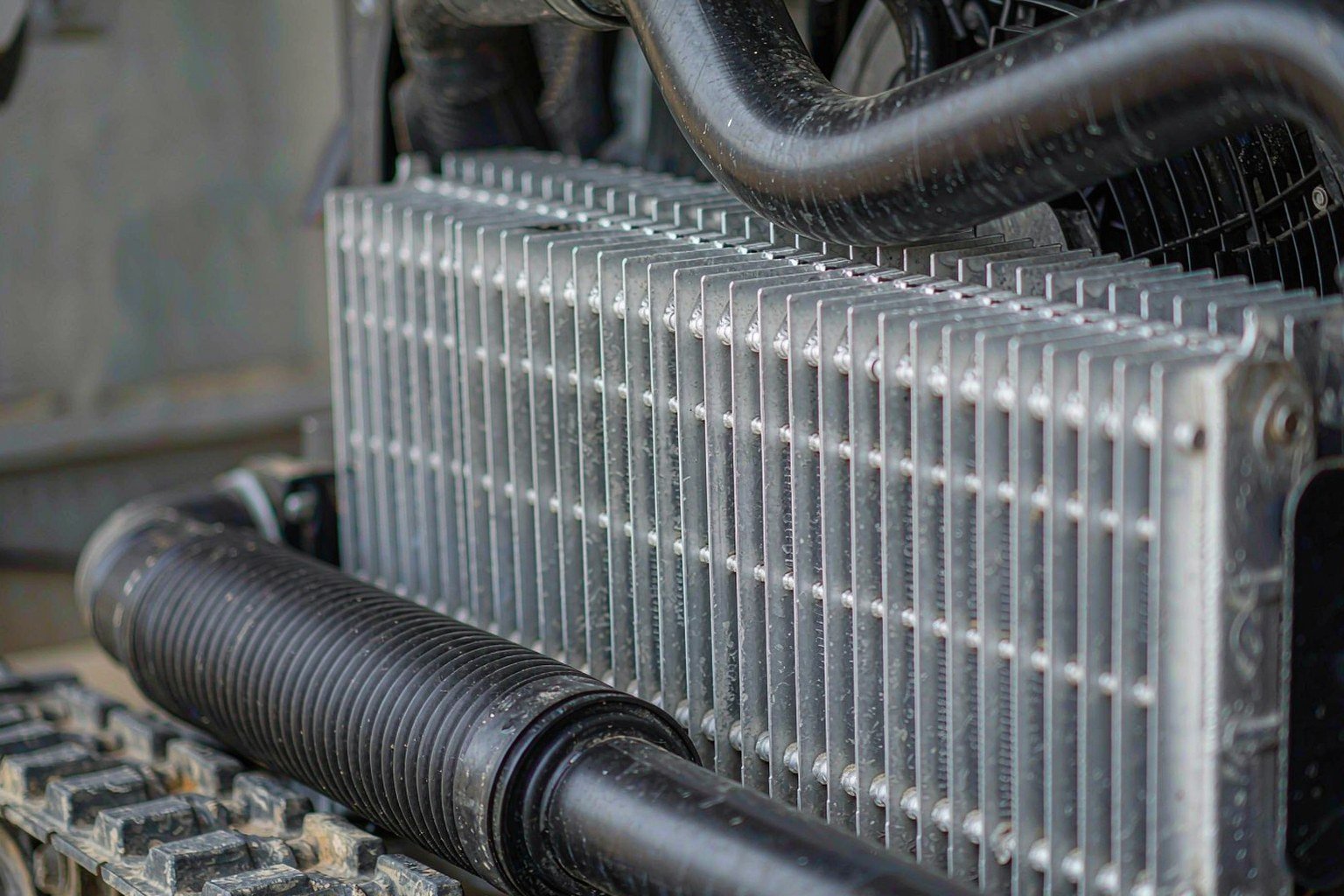
When a check valve sticks in the normally open position, hot return oil no longer passes through the radiator. Instead, it takes the bypass path straight back to the tank. The oil that should be cooled circulates again and again, carrying more heat into the system with every pass. The radiator inlet and outlet pipes feel equally hot because almost no oil is flowing through the cooler at all.
Three things cause the valve to stick open:
- Oil contamination. Long intervals between oil changes let fine debris, oxidation by-products and metal particles build up between the valve poppet and seat. The grit prevents the poppet from seating fully.
- Spring failure. A fatigued or broken spring cannot push the poppet closed against reverse pressure. Without spring force, the valve defaults to open.
- Varnish and lacquer. Oxidized oil leaves a sticky film on the valve body. The poppet literally glues itself in the open position, especially after a hot shutdown.
A documented case on a Hyundai R305LC-7 illustrates the point perfectly. After two hours of continuous work the hydraulic oil temperature alarm triggered at 106 °C. System pressure tested normal, but the return-oil pressure measured at the check valve inlet was only 0.04 MPa — far below the normal 0.3 MPa. Infrared thermometer readings showed the radiator inlet and outlet were both 64 °C with almost no temperature difference. After removing the check valve, technicians found the poppet stuck open by varnish and contamination. Cleaning and light grinding restored normal flow, and oil temperature dropped back into the safe range.
That case study is detailed in full at this R305LC-7 hydraulic oil temperature diagnostic report, including the step-by-step pressure and temperature readings that proved the fault.
If your machine also logs coolant or engine temperature faults alongside hydraulic heat, the Hitachi coolant temperature sensor (4436537) is worth testing before you open the hydraulic system.
4. Field Diagnosis — Two Tests That Cost Nothing
You do not need an electronics lab to confirm a stuck check valve. Two simple field tests — one with an infrared thermometer, one with a pressure gauge — will tell you in under ten minutes.
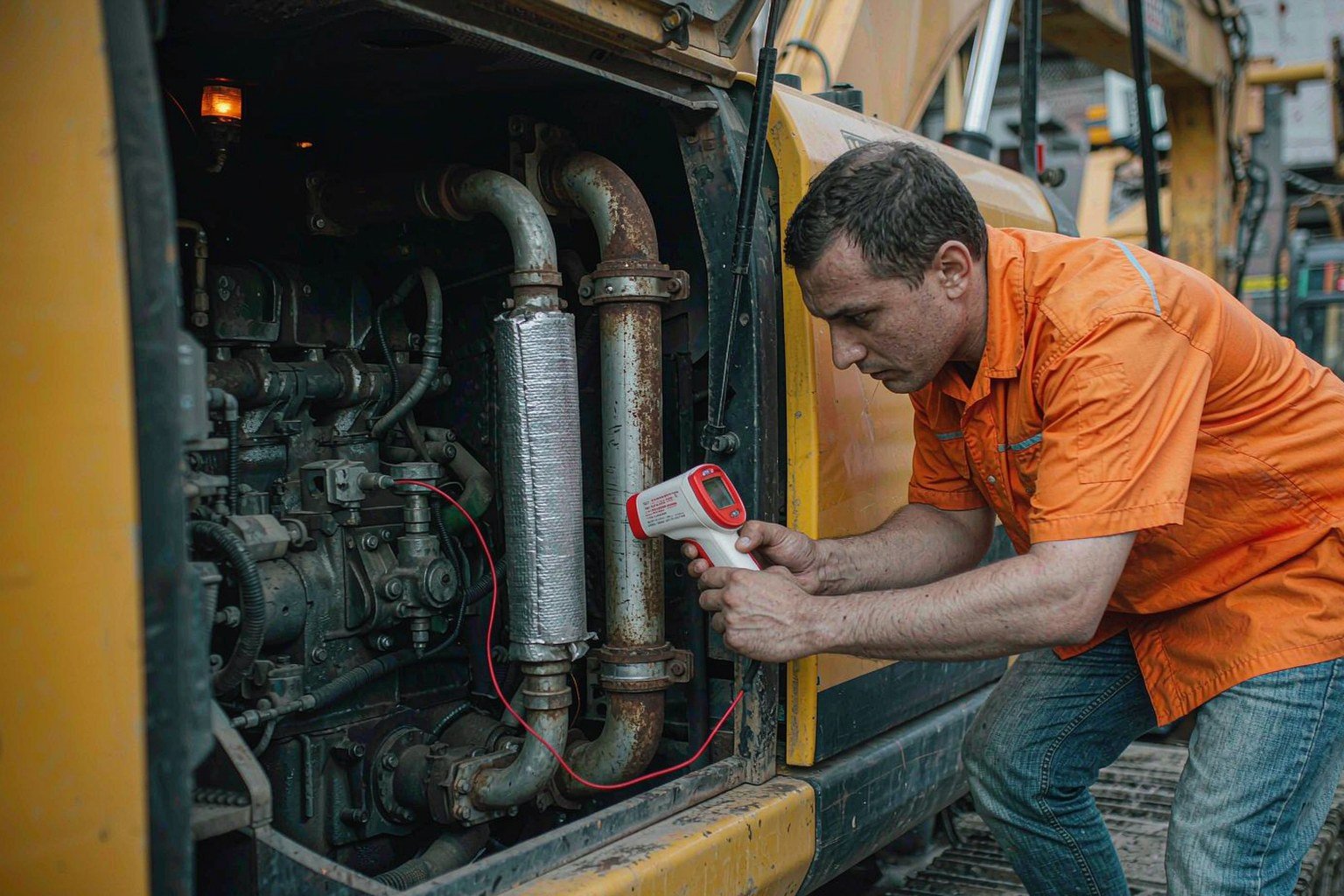
Test 1: Temperature drop across the cooler. Warm the machine until the gauge reads high. Use an infrared laser thermometer to measure the temperature of the oil cooler inlet pipe and the outlet pipe. A healthy cooler should show a temperature drop of 5 °C to 10 °C. If both pipes read nearly the same high temperature, oil is bypassing the cooler through a stuck-open check valve.
Test 2: Return-oil pressure at the check valve. Install a pressure gauge at the inlet of the parallel check valve. Normal return pressure should be roughly 0.3 MPa under working load. If the reading is down near 0.04 MPa, the valve is open and oil is flowing straight back to the tank without resistance.
Test 3: Cooler internal pressure differential. To rule out a blocked radiator core, install gauges at the cooler inlet and outlet. At roughly 45 °C oil temperature, the pressure difference should be below 0.12 MPa. A reading above 0.12 MPa means the cooler core itself is internally blocked — a different fault that also raises temperature, but one that requires radiator cleaning or replacement rather than a valve repair.
For a broader look at how return-line filter check valves interact with the cooling circuit in different excavator brands, the analysis of hydraulic heating failure by component 清晰地映射出原理图中的相互关系。.
在配备液压驱动冷却风扇的机器上,出现故障的 日立液压风扇泵 也可能导致散热器气流不足。在断定止回阀是唯一故障之前,请先检查风扇转速。.
5. 维修、更换与预防
一旦诊断结果指向止回阀,与更换主泵相比,修复工作简单且成本低廉。.
- 每次更换液压油时均应进行检查。. 该阀位于回油滤清器壳体底部——请将其取出检查,不要仅仅排掉油液就置之不理。.
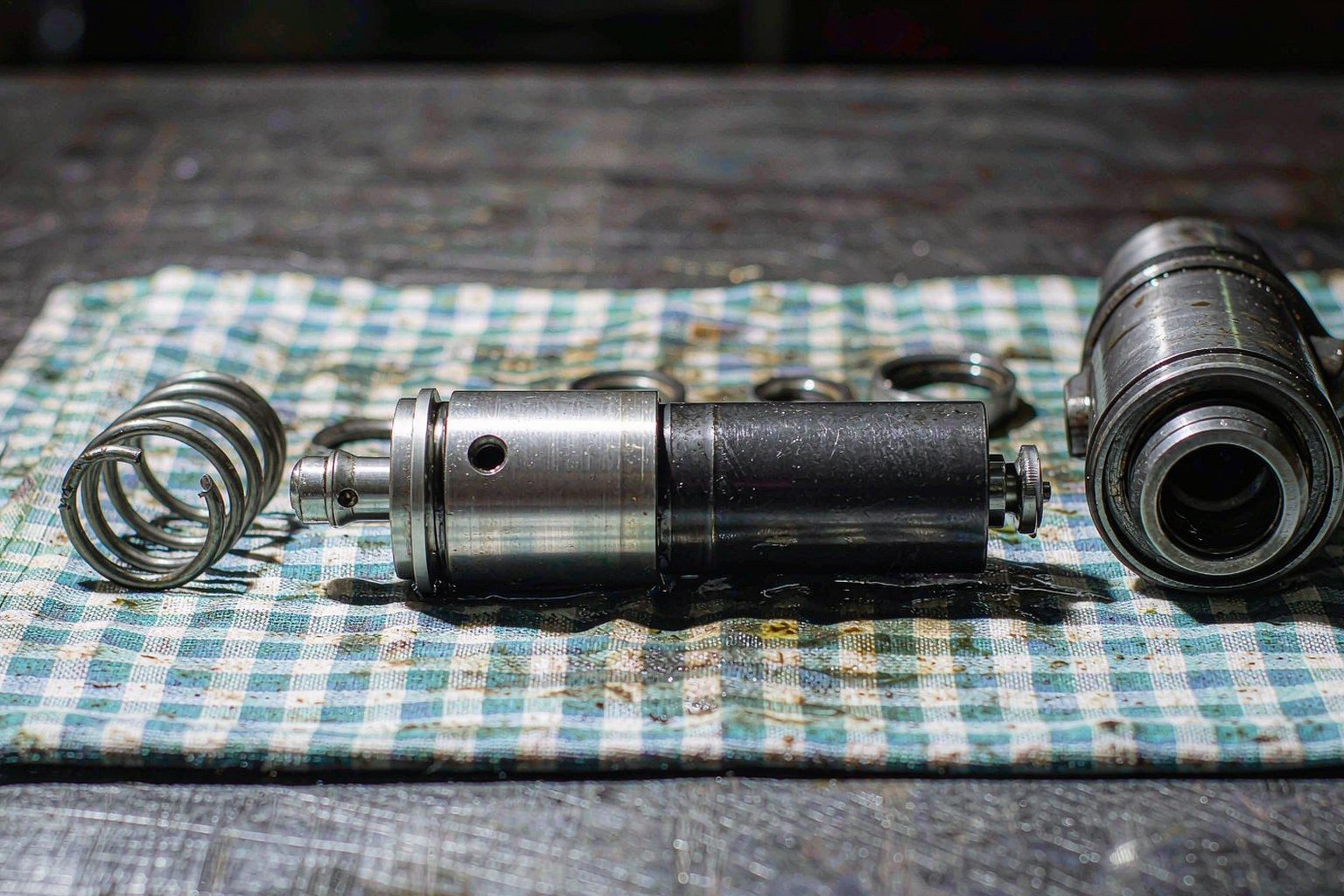
- 检查弹簧。. 断裂或疲劳的弹簧是最容易发现的单一故障。请按照您机器型号更换具有正确刚度和自由长度的弹簧。.
- 检查提升阀芯及阀座。. 检查是否存在拉伤、点蚀或嵌入的杂质。轻度抛光可修复磨损的阀座;深度拉伤则需更换。.
- 清除清漆和油泥沉积物。. 使用零件清洗机和软毛刷。切勿将钢丝刷强行伸入阀孔——这会改变间隙并形成泄漏通道。.
- 更换密封件和O型圈。. 阀体拆解后务必安装新的密封件。因受热硬化的O型圈是常见的二次泄漏路径。.
- 冲洗回路并更换油液。. 受污染的油液会在数小时内重新污染阀门。请使用制造商针对您环境温度范围规定的粘度等级。.
- 清洁冷却器外部。. 散热器翅片间的泥污、灰尘和植物碎屑是非洲工地上传热不良的主要原因。在多尘条件下,请每周吹扫翅片。.
清洁的油液是最经济的保障。如果您的机器在内罗毕、蒙巴萨和裂谷地区常见的红土粉尘条件下作业,请将换油周期缩短20%,并在每次保养时检查止回阀。.
如果在止回阀和冷却器检查正常后泵本身仍工作异常,则 日立角度传感器(4444902) ——即斜盘位置反馈装置——是下一个应测试的逻辑组件,因为无法感知自身行程的泵会过度工作并产生不必要的热量。.
6. 在肯尼亚采购止回阀、冷却器和密封件
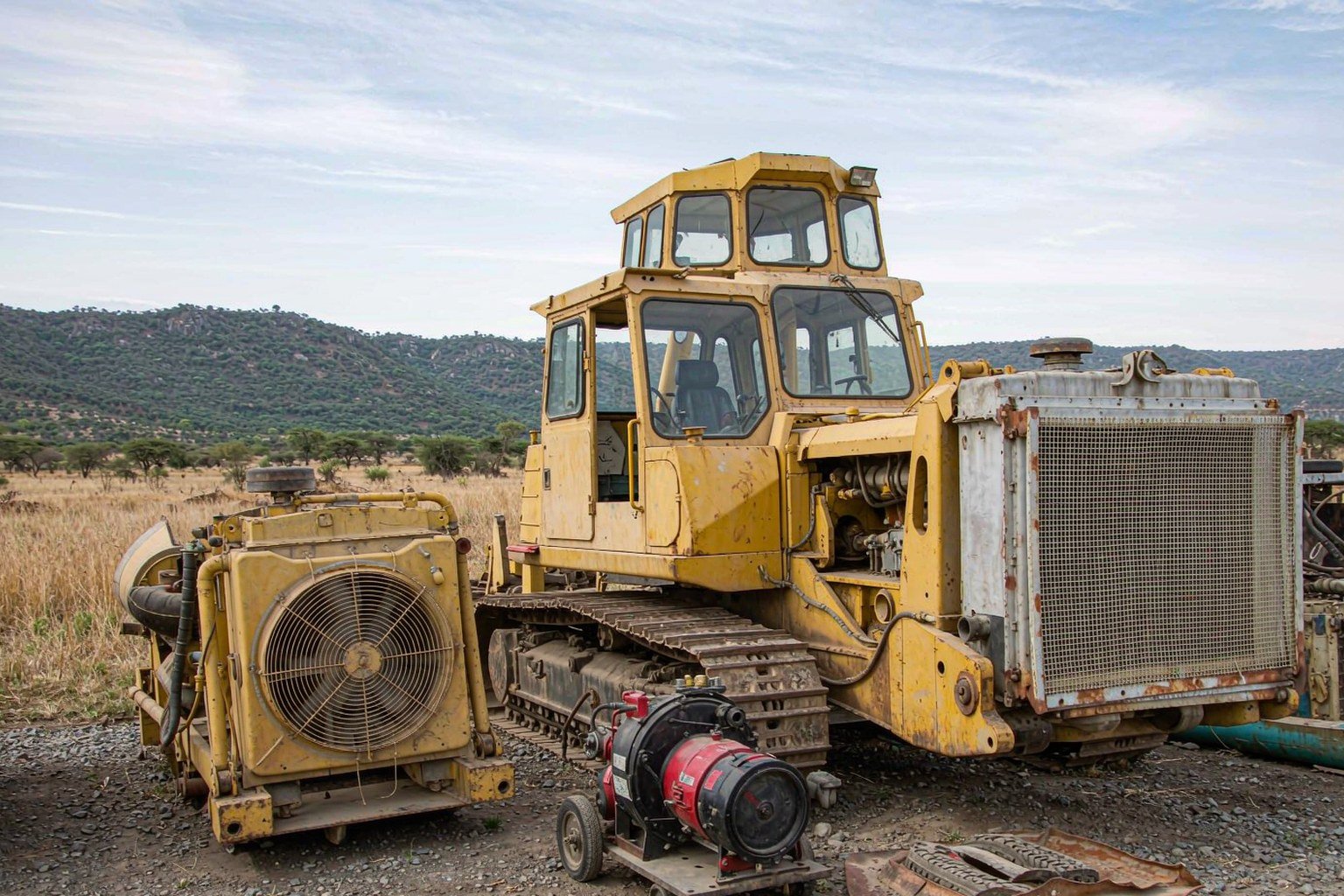
肯尼亚是东非最繁忙的建筑设备市场之一。在2030愿景和四大议程的推动下,年建筑产值超过 120亿美元, ,在建公路超过10,000公里,40多个活跃的采矿和采石项目推动着挖掘机需求。如此规模意味着大量老旧设备现在需要常规冷却系统部件——止回阀、冷却器芯体、风扇泵、密封件和滤清器。.
散热器和冷却器总成的进口数据(HS编码870891)显示了肯尼亚这些部件的采购来源。2024年,肯尼亚进口散热器总值约为 335万美元 (全球范围)。. จีน 供应了最大份额,约 125万美元 (317吨),紧随其后的是 日本 ,约 116万美元 (424吨)。南非、印度和德国位列主要供应国之列。对于挖掘机车主和维修车间而言,这意味着从亚洲经蒙巴萨港至内罗毕内陆地区已存在可靠的供应链。.
| 供应国 | 贸易额(美元) | 数量(千克) | 说明 |
|---|---|---|---|
| 全球总计 | 约335万美元 | 930,277 | 所有机动车散热器,包括挖掘机油冷却器 |
| จีน | 约125万美元 | 317,363 | 按价值和数量计算均为售后市场最大供应国 |
| 日本 | 约116万美元 | 424,038 | OEM source for Hitachi, Komatsu and other Japanese brands |
| South Africa | ~$268,500 | 38,697 | Regional aftermarket hub for East Africa |
| India | ~$200,000 | 37,318 | Growing supplier of cooling components and hose assemblies |
| พารามิเตอร์ | Normal range | Fault indicator | Likely cause |
|---|---|---|---|
| Hydraulic oil operating temperature | 50–70 °C | >85 °C sustained | Poor cooling or excessive heat generation |
| Cooler inlet / outlet temperature drop | 5–10 °C | ≈0 °C (both hot) | Oil bypassing cooler via stuck check valve |
| Return oil pressure at check valve | ~0.3 MPa | ~0.04–0.1 MPa | Check valve stuck open |
| Cooler internal pressure differential (≈45 °C) | <0.12 MPa | >0.12 MPa | Cooler core internally blocked |
| Check valve bypass opening pressure | ~0.185 MPa | Stuck open permanently | Contamination, broken spring or varnish |
| Hydraulic pump case drain flow | <5–10 % of rated output | Excessive flow | Pump internal wear generating heat |
When you order parts, a few rules keep downtime short and costs controlled:
- Match by part number and machine serial. Check valves, cooler cores and seal kits are model-specific. A valve for a ZX200 will not necessarily fit a ZX330.
- OEM vs. quality aftermarket. Genuine valves and springs are safest for critical circuits, but a well-made aftermarket check valve with a warranty can cut cost by 30–50 %.
- Order seal kits together. The O-rings and backup rings that seal the valve body often harden before the steel parts wear. Replacing them together avoids a second shutdown.
- Plan Mombasa-to-Nairobi logistics. Confirm lead time before your machine goes down. Express air freight is available for small valve and seal kits if the site is urgent.
For the broader picture of Kenya’s construction equipment parts demand, the World Bank WITS trade data on Kenya radiator imports gives a data-driven view of sourcing trends, and the Kenya excavator spares market overview outlines the infrastructure projects driving parts demand from Nairobi to Mombasa. Browse our full excavator parts catalog for check valves, cooler cores, fan pumps and seal kits with current availability.
The Bottom Line
When hydraulic oil temperature refuses to drop even after you have replaced every seal, filter and bearing, the fault is rarely in the new parts. Two small check valves control whether hot oil passes through the radiator or takes a shortcut back to the tank. Test them with a thermometer and a pressure gauge, clean or replace them, and keep the oil clean. That is how you stop the temperature climb without spending money on parts you do not need.