An excavator cab assembly can look complete in a quotation photo while still omitting the parts that control installation time, operator visibility and final cost. One supplier may quote a painted shell with glass. Another may include the door, wiper system, wiring, seat base, interior trim and climate-control components. Comparing those two prices without a written scope creates a false comparison.
A reliable purchase starts with three items: the exact machine identity, an inclusion-and-exclusion matrix, and evidence for every interface that must connect to the machine. This buyer guide turns those items into an RFQ and acceptance process. It applies whether you are reviewing a broad excavator cab catalog or requesting a model-specific quotation.
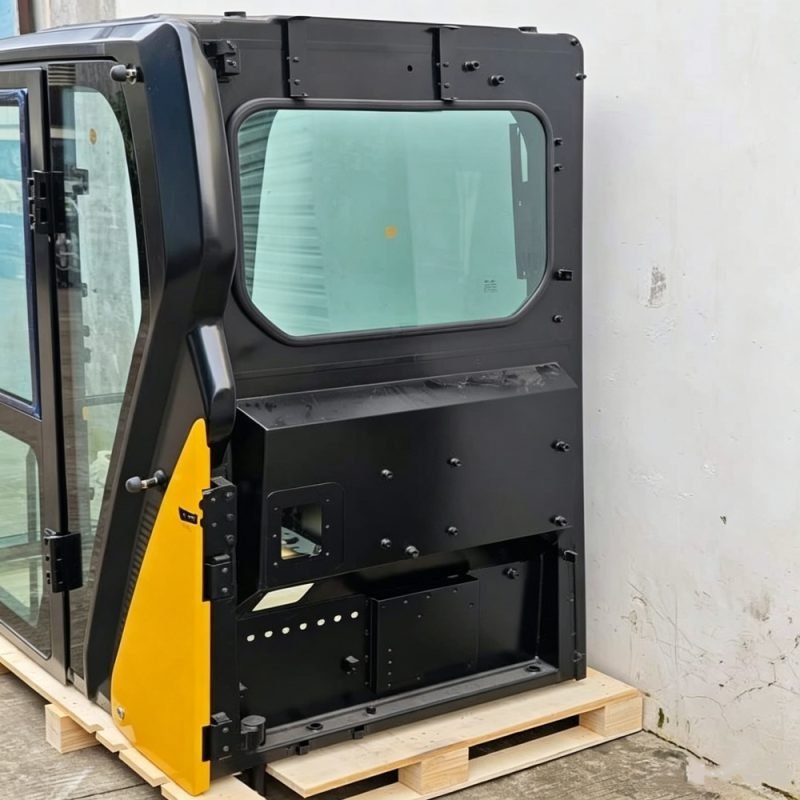
Define the supply scope before comparing quotes
“Cab assembly,” “complete cab” and “cab shell” are not precise enough for a purchase order. Ask each supplier to mark every line of a common scope sheet as included, excluded, optional or reused from the old machine. Require current photos of the quoted configuration rather than treating a catalog photo as the final packing list.
Caterpillar’s official upgrade-cab program, for example, describes its own cabs as fully assembled and publishes model, series, serial-prefix and part-number references. That is useful evidence of how detailed a defined cab program can be. It does not establish the content or compatibility of a third-party cab, so obtain the same level of clarity for the item you are actually buying.
| RFQ line | What the supplier should confirm | Why it changes the comparison |
|---|---|---|
| Structure and panels | Main frame, roof, floor, rear panel, side panels and paint condition | Separates a shell from an installed assembly |
| Door and glazing | Door, hinges, latch, locks, seals, front/rear/side glass and opening windows | Missing hardware can delay sealing and commissioning |
| Operator station | Seat, base, console brackets, pedals, floor mat and interior trim | Shows what must be transferred from the old cab |
| Electrical equipment | Harness, connectors, lamps, switches, monitor provision and fuse/relay items | Connector and control differences often appear during installation |
| Climate and visibility | HVAC unit, ducts, controls, wiper motor, arms, washer parts, mirrors and camera mounts | These items affect daily operation and final acceptance |
| Installation items | Mounts, cushions, brackets, fasteners, hoses, grommets and pass-through seals | Small omitted interfaces can stop an otherwise complete job |
Lock the machine identity and interface data
A model name alone may cover different production series or regional configurations. Put the full machine model, serial number, serial prefix and any available cab or structure number on the RFQ. Add clear photographs of the machine plate, the complete old cab and each mounting point. If the old cab is damaged, photograph the undamaged interfaces separately.
Catalog pages such as the CAT 320GC cab assembly, Komatsu PC200-7 cab assembly and Doosan DH225-7 cab assembly help identify the intended product family. They are starting points for an inquiry, not proof that every machine carrying that model label uses the same interfaces. Written fitment approval should refer back to the data package supplied by the buyer.
| Evidence to send | Detail to capture | Supplier response to request |
|---|---|---|
| Machine plate | Model, full serial number and readable prefix | Identity repeated on the quotation and order confirmation |
| Old cab overview | Front, rear, both sides, roof, floor and door opening | Annotated comparison against the offered cab |
| Mounting points | Hole pattern, bracket shape, cushion position and reference dimensions | Marked drawing or matching photos |
| Harness and controls | Connector faces, pin count, labels, monitor and switch panels | List of direct connections, adaptations and reused parts |
| HVAC and hoses | Ports, hose routing, ducts, drain and control type | Interface statement and supplied fittings |
| Attachments | Mirrors, lamps, antenna, camera and guard mounting points | Included brackets and any drilling or fabrication required |
Treat protective-structure claims as document questions
A cab enclosure and an operator protective structure are related, but they are not automatically the same claim. The exact machine, cab frame, guard configuration and intended operating risk determine which documents are relevant. A photo, decal or general statement such as “guard ready” does not identify the tested structure.
ISO 10262 covers laboratory tests and performance requirements for operator protective guards on hydraulic excavators. ISO 12117-2 addresses roll-over protective structures for certain hydraulic excavators where a rollover risk exists. Their presence in an RFQ should prompt specific questions, not a blanket assumption that either standard applies to every replacement cab.
Ask the supplier to identify the exact structure covered by any declaration or test report, the machine range or configuration named in the document, and whether later welding, drilling or guard installation affects that statement. Have the responsible safety or engineering person review the documents against local rules and the machine’s intended work. Do not release an order on an undefined “ROPS/FOPS” line in a quotation.
Check visibility, access and operator interfaces
Cab replacement changes more than the enclosure. Glass tint, window openings, seals, wiper sweep, mirror brackets and camera positions can affect what the operator sees. The UK Health and Safety Executive’s guidance on safe manoeuvring says windows and mirrors should be clean, unobstructed and in good repair. For a buyer, that supports a practical acceptance rule: inspect the complete field of view with the machine assembled, rather than approving glazing from a pallet photo.
Also compare the door opening, steps, handholds, emergency exit arrangement, seat mounting and control clearances. Confirm that the door latches securely in its normal positions and that seals sit evenly. Switches, pedals, joysticks and displays should move through their full range without contact with panels or trim. Any part transferred from the original cab should appear in the work instruction and labor estimate.
Plan packing and receiving inspection
Put packing requirements into the order before the cab is collected. Ask for protection around glass edges, door frames, roof corners, connectors, hose ports and protruding brackets. The cab should be secured through suitable structural points, with loose parts identified and packed so they cannot strike glazing or painted surfaces. Request packing photos that show the cab before wrapping, the protected interfaces and the completed crate or pallet.
At receipt, inspect the package before unloading and record any external damage. Then compare the unit with the approved scope sheet while the packing list is available. Photograph the serial or identification markings, all sides, glass, door operation, connectors, mounts and loose accessories. Report shortages or transit damage promptly under the agreed sales and carrier procedures. Avoid installation until obvious shipping damage, missing parts or identity conflicts have been resolved in writing.
Put installation acceptance in the purchase order
The quotation should say what counts as an accepted cab. A visual match on the ground is insufficient. Define checks that can be completed after mounting and connection, and assign responsibility for any adaptation. If a local installer will perform the work, let that team review the RFQ before purchase so it can identify measurements, lifting points, seals, connectors and transferred components that the buyer may miss.
| Acceptance stage | Check | Evidence to retain |
|---|---|---|
| Before installation | Identity, dimensions, mounting points, supplied scope and transit condition | Receiving photos and signed scope sheet |
| Mechanical fit | Mount seating, clearances, door operation, seals and panel alignment | Installed photos and exception list |
| Electrical/HVAC | Connector fit, lights, wipers, washer, controls, blower and required instruments | Functional test record |
| Operator review | Access, seat/control clearance, visibility, mirrors and camera view | Commissioning checklist |
| Closeout | Loose parts, reused parts, modifications and documents reconciled | Final acceptance signed by responsible personnel |
Buyer checklist before order release
- Record the full machine model, serial number and serial prefix.
- Send machine-plate, old-cab, mount, connector, HVAC and control photos.
- Require an included, excluded, optional or reused answer for every scope line.
- Obtain marked interface evidence and written fitment confirmation.
- Review any protective-structure claim against the exact structure and intended use.
- Define glazing, wiper, mirror, camera, access and control acceptance checks.
- Approve packing protection, loose-part control and pre-dispatch photos.
- Put receiving, installation and closeout evidence into the purchase order.
A strong excavator cab assembly order is a controlled package, not a model name and a photograph. Send Hongtengda your machine plate, cab photos, required scope matrix and interface details. The quotation can then state what is supplied, what must be reused and which fitment points still need buyer verification before the order is released.